Portable White Noise Machine for Flights: Honest Review
The hotel room in Porto was gorgeous, the sheets were crisp, and the couple arguing in the hallway at 2 AM was absolutely determined to ruin my sleep before a 6 AM flight.
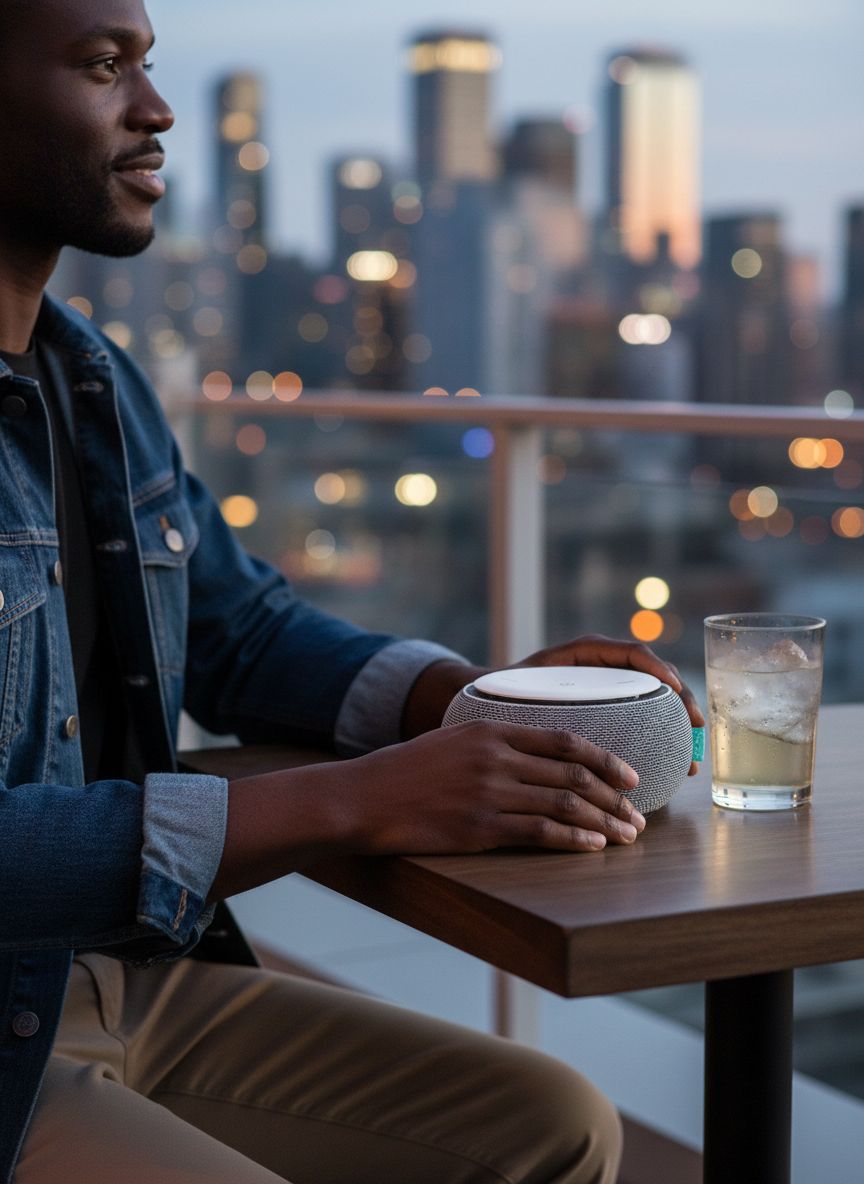
The SNOOZ Smart White Noise Machine was sitting in my carry-on that night, tucked between a charging brick and a wrinkled packing cube, and I am not exaggerating when I say it saved the trip. I pulled it out, set it on the nightstand, dialed the app to a low hum, and within four minutes the hallway drama dissolved into something that sounded like a ceiling fan in a well-insulated bedroom. I fell back asleep. I made my flight. I arrived home having actually rested. That single night in Porto is the reason this device now lives permanently in my travel kit.
The First Time I Used It
I came across the SNOOZ white noise machine the way I find most things I end up loving: a colleague mentioned it in a Slack channel devoted entirely to sleep complaints, someone agreed, someone else posted a link, and I filed it away for three months before actually buying one. The trigger was a run of terrible hotel stays, the kind where the HVAC kicks on at 3 AM like a small aircraft is launching from inside the wall. I travel frequently enough that poor sleep isn’t a quirk, it’s a recurring cost, and I’d started to take it seriously.
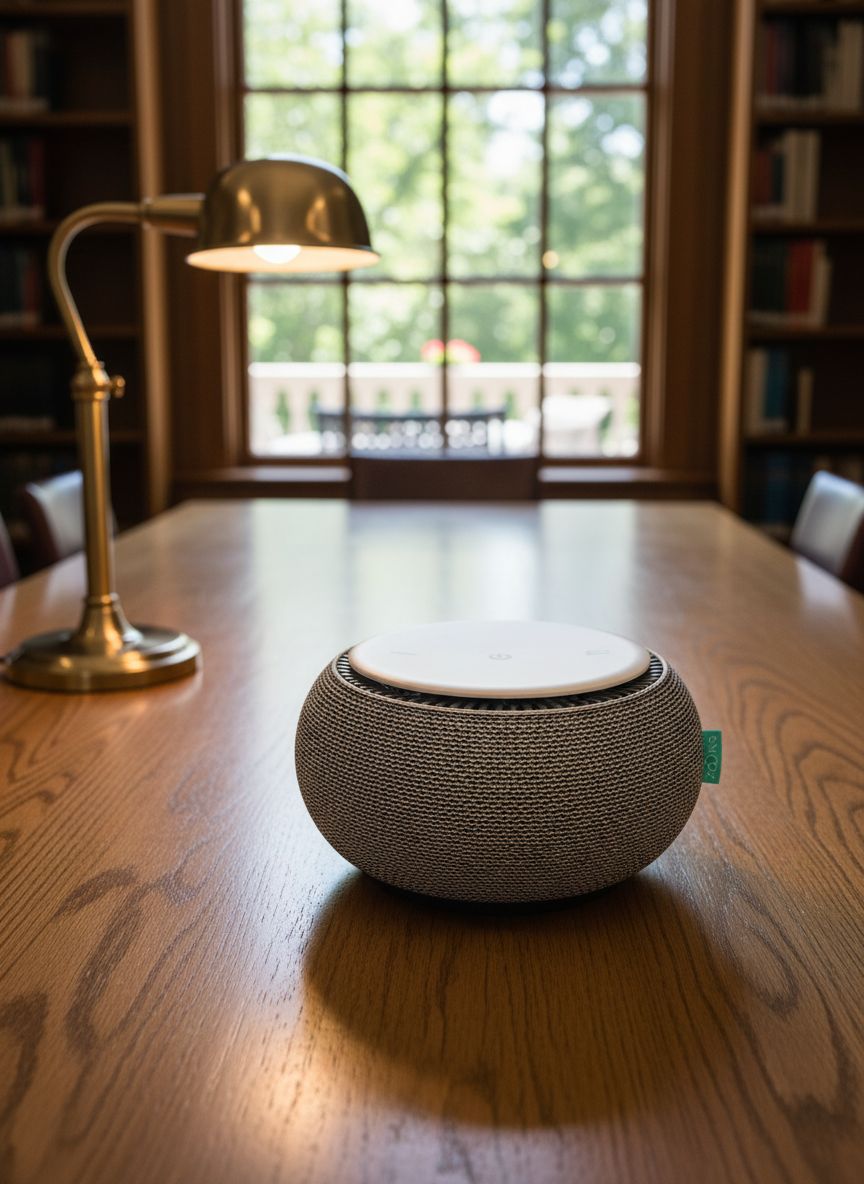
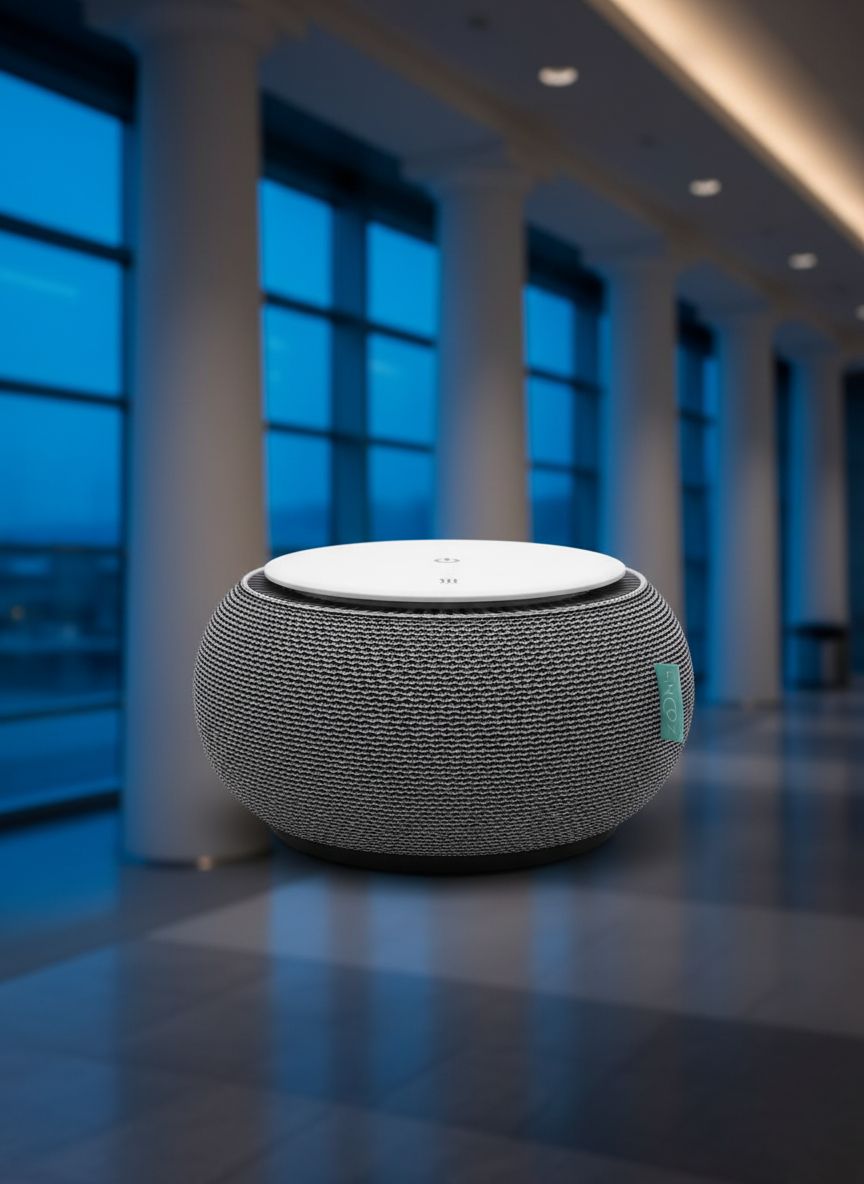
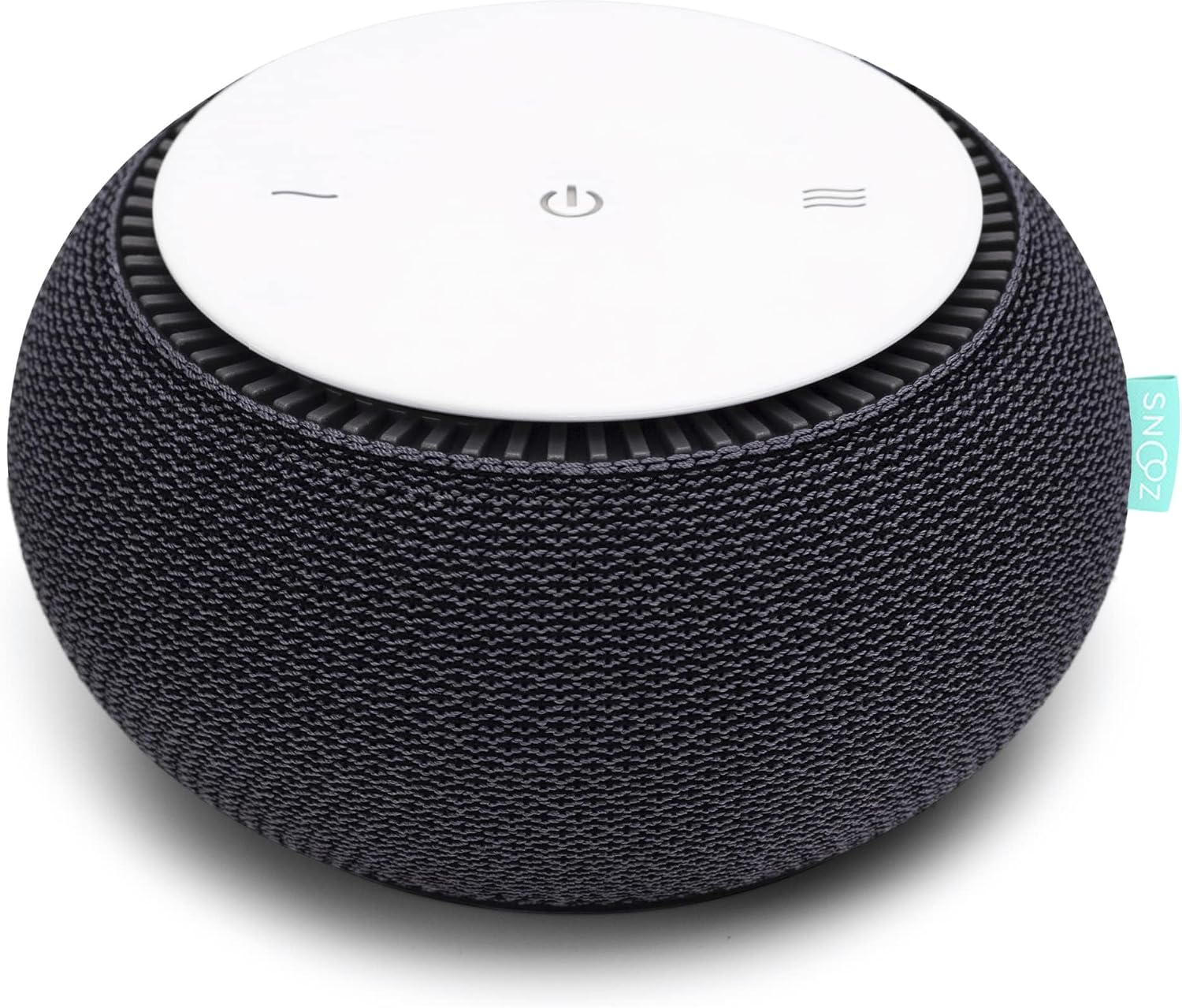
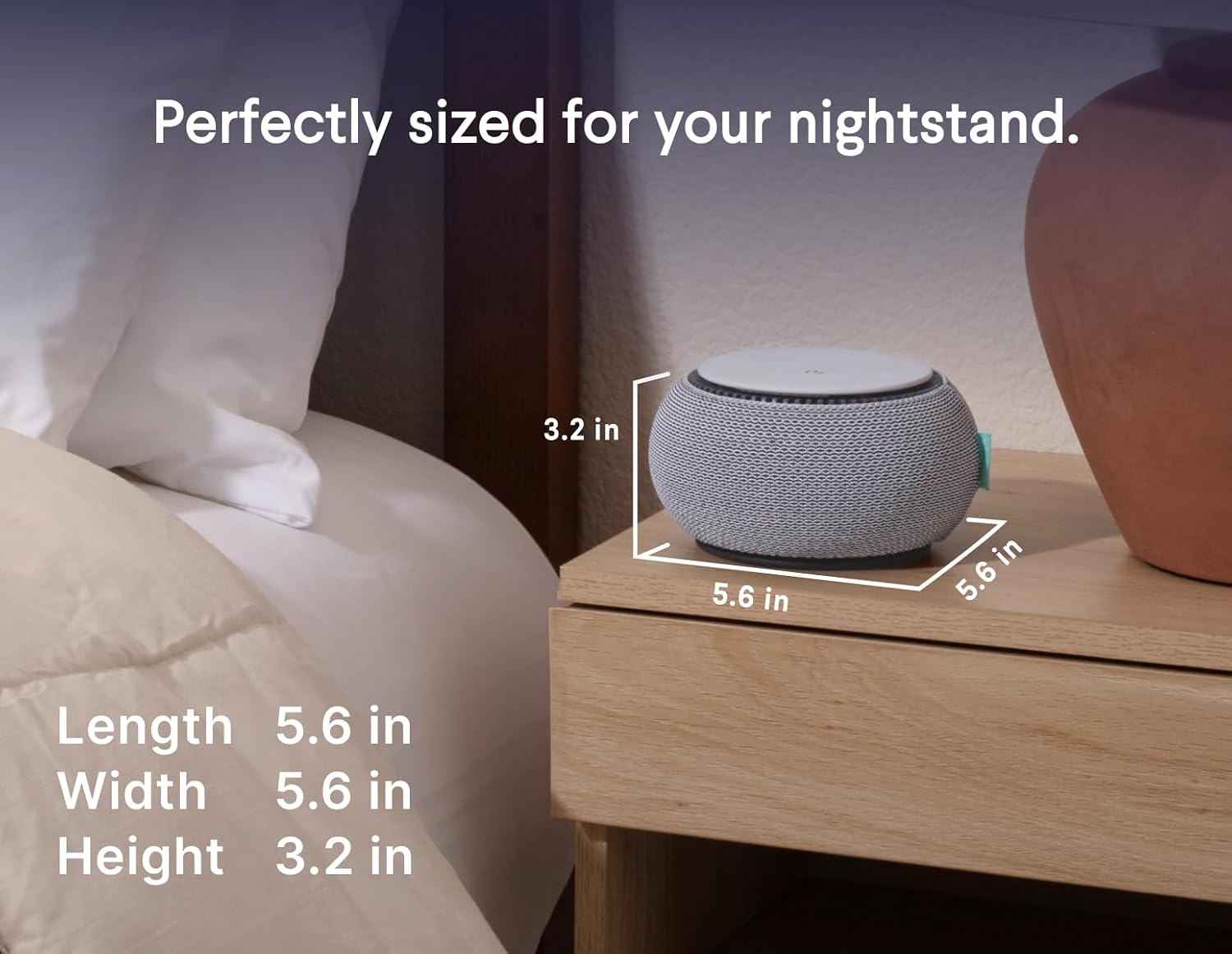
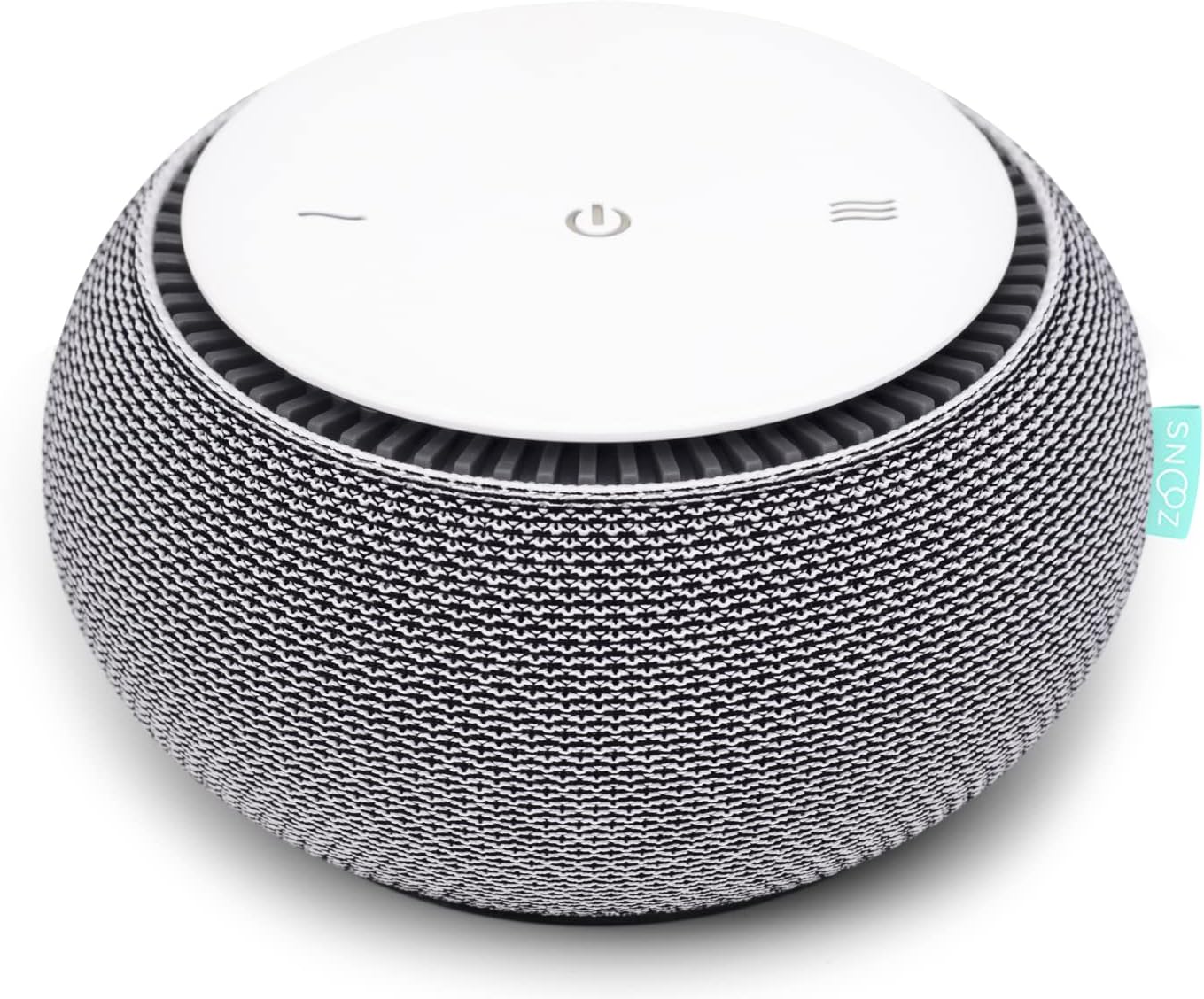
I ordered the Cloud colorway because it looked like something that wouldn’t embarrass me on a nightstand in a design-forward hotel. What showed up was smaller than I expected, roughly the size of a hockey puck with ambitions. The real surprise came the first time I powered it on.
How It Actually Performs
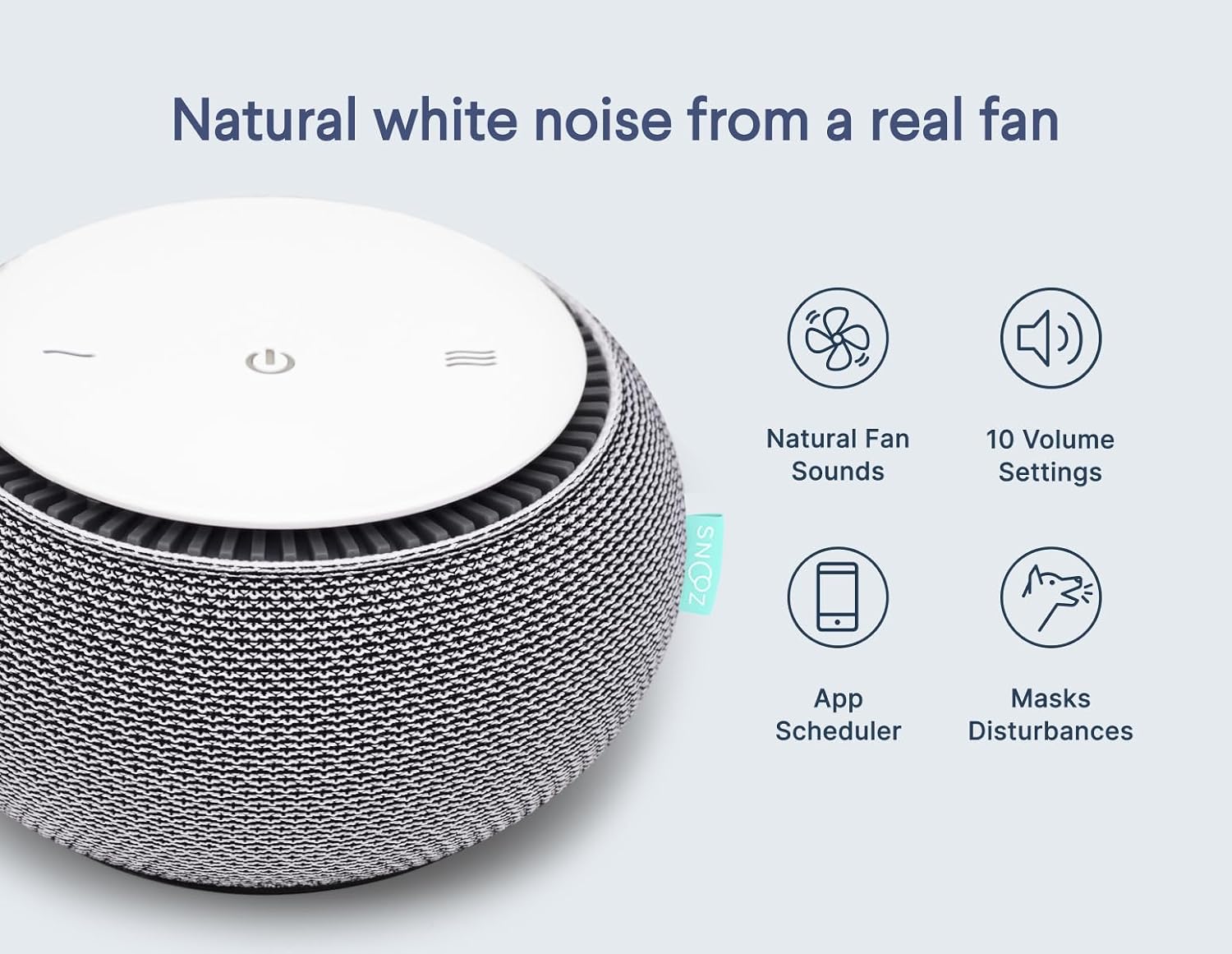
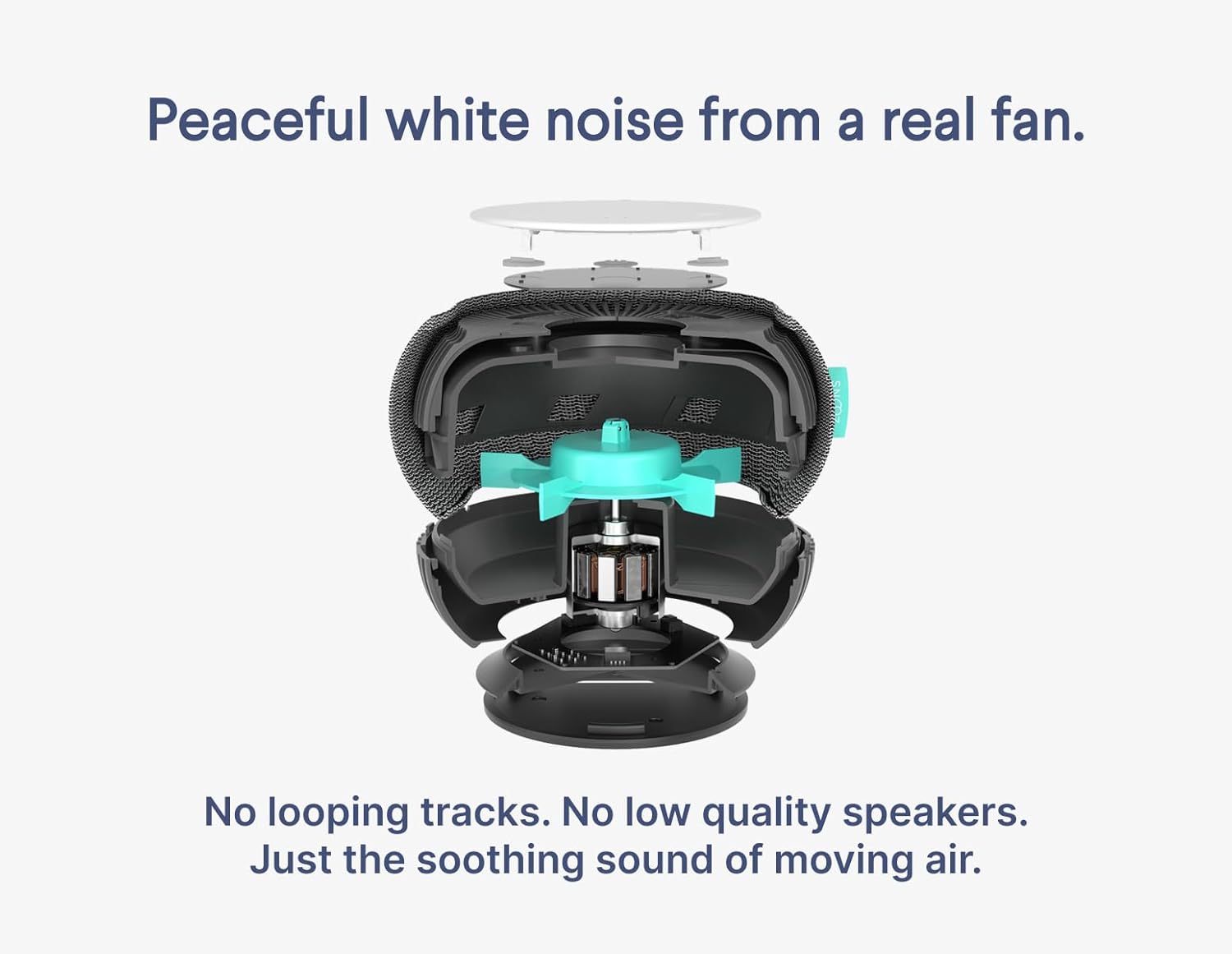
Here is the thing about most white noise machines and sleep aids for travel: they play recorded audio on a loop. You might not consciously notice the loop, but your brain does, and at some low level it keeps waiting for the pattern to reset. The SNOOZ uses an actual internal fan to generate sound, which means the noise is organic, variable, and genuinely continuous. It sounds like white noise because it physically is white noise, not a simulation of it. The difference is subtle but real, and once you’ve slept with it you feel it in the quality of your rest.
“It sounds like white noise because it physically is white noise, and once you’ve slept with it you feel it in the quality of your rest.”
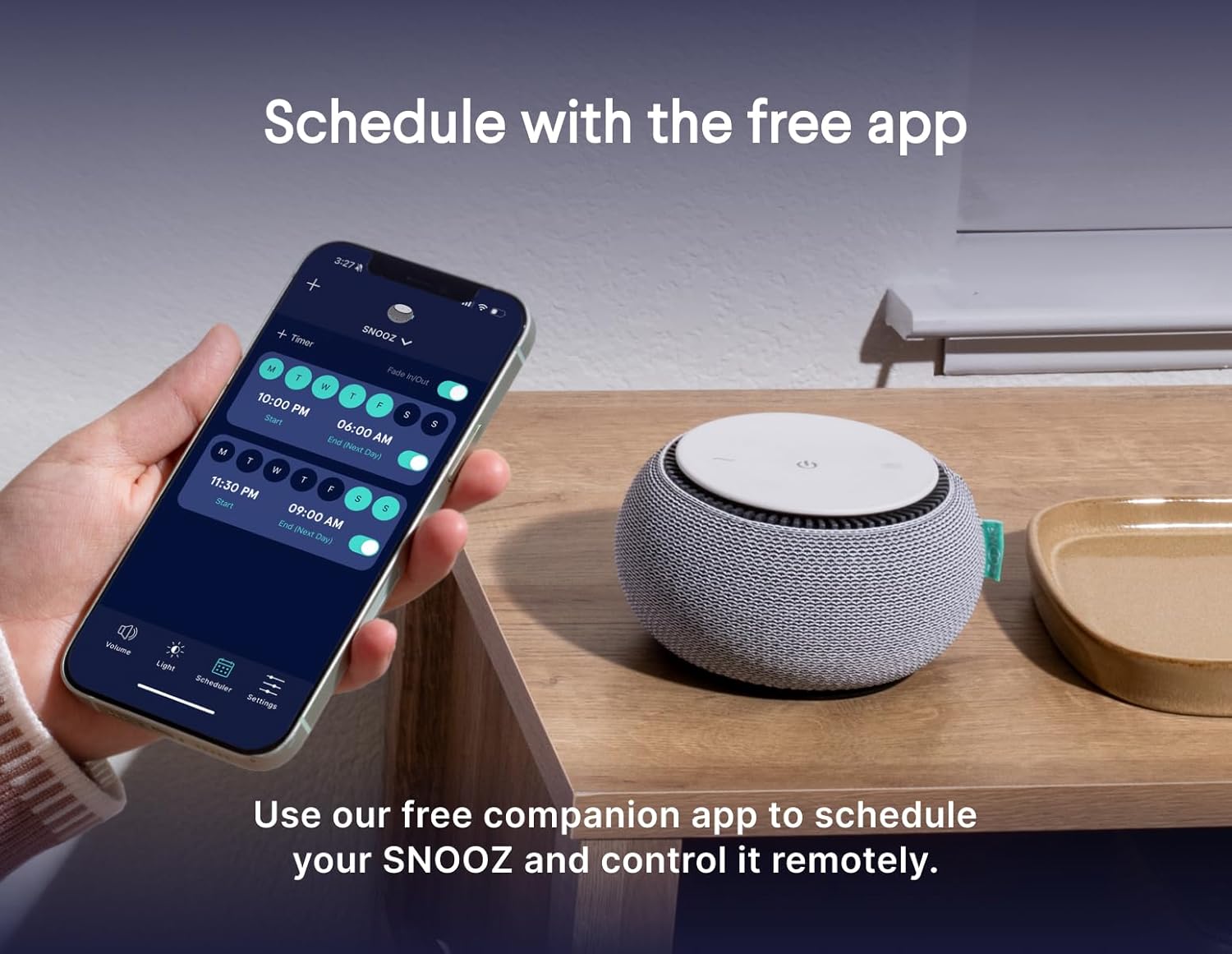
The companion app lets you adjust tone and volume across a surprisingly wide range, from a barely-there murmur to something that would drown out most hallway conversations. It also supports a timer, which I use on nights when I want it to taper off before morning. One honest caveat: the app setup took me two tries to get right, and the Bluetooth pairing was briefly finicky on an older iPhone. It resolved itself, but I’ve seen similar notes from other users, so go in expecting a small learning curve. For deeper context on what to look for in sleep technology for travelers, the team at Travel + Leisure has covered the broader category well.
The Trips I Actually Took It On
Trip 1: Long Weekend in Porto
Already mentioned the hallway couple. But the full Porto trip was four nights in a boutique hotel near the Ribeira waterfront, which meant cobblestone noise, tram bells, and the general enthusiasm of a city that does not quiet down until well past midnight. I ran the SNOOZ on its mid-tone setting every night and slept through things I would not have slept through otherwise. By night three I had stopped thinking about it as a device and started thinking of it as part of the room. Packing it out on the last morning felt like dismantling something structural.
Trip 2: Cross-Country Red-Eye
This one was a test. I packed the SNOOZ in my carry-on luggage for a late-night flight from Los Angeles to New York, not because I expected to use it on the plane, but because I had a noon meeting the next day and needed the hotel sleep to actually count. The room was fine, quiet even, but the air conditioning was either off or on at full blast with nothing in between. I ran the SNOOZ at its lowest setting to mask the cycling and slept a solid six hours. The meeting went well. Correlation, maybe. But I’ll take it.
Trip 3: A Week Working from a Rental in Mexico City
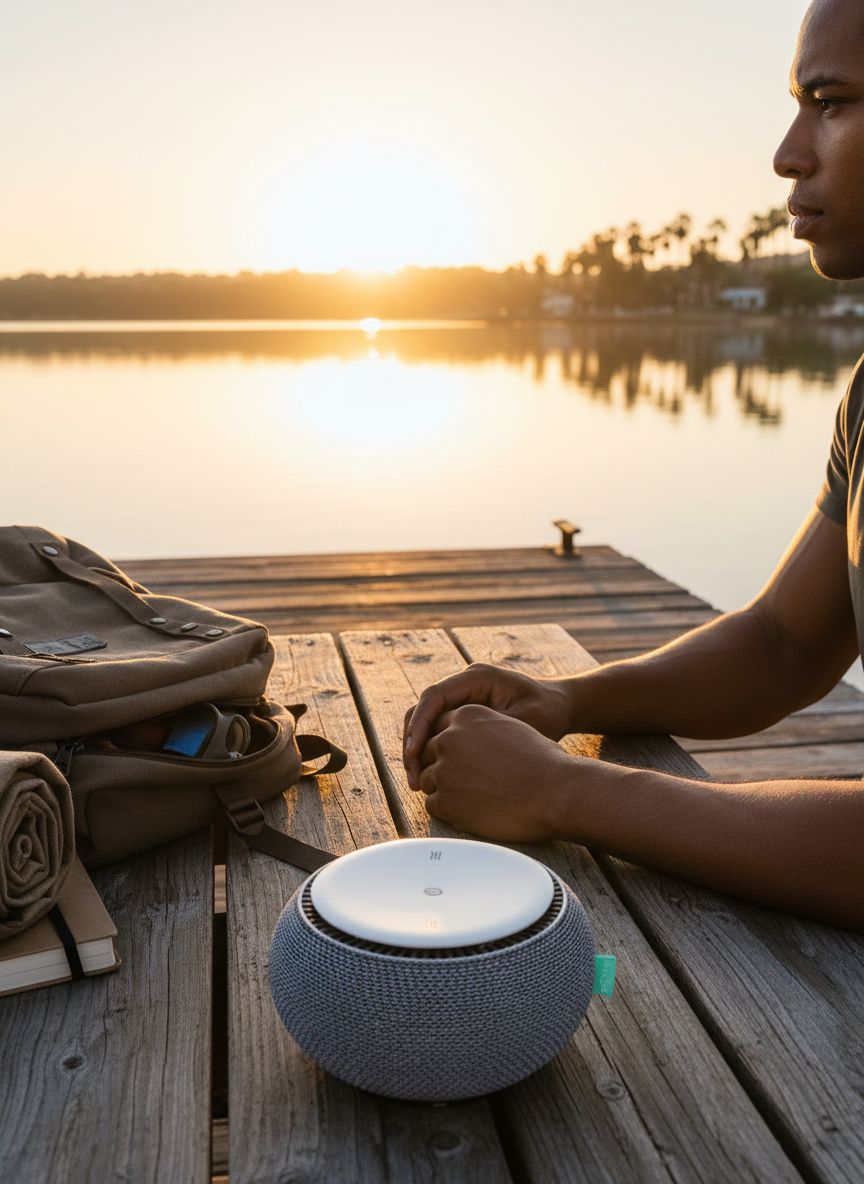
Mexico City is extraordinary and it does not sleep. My rental in Colonia Roma was lovely and the street outside was a live performance that started around 7 AM with fruit vendors and escalated from there. I used the SNOOZ both for nighttime sleep and for afternoon focus sessions, running it beside my laptop during calls to create a consistent ambient layer. For remote work trips, this thing pulls double duty in a way I didn’t anticipate. It turned a noisy apartment into something that felt workable by 9 AM.
What Other Travelers Are Saying
With over seven thousand ratings and a score sitting at 4.6, the consensus is unusually consistent for a sleep product, a category where preferences tend to splinter sharply. The recurring themes in positive feedback center on the sound quality and the portability, while the minority of critical notes tend to focus on the app experience rather than the device itself.
What that distribution tells me is that the hardware is solid and the software still has room to grow. That’s a reasonable trade-off for a device you’re primarily buying to generate sound, not to run a complex interface.
Who Should Skip It
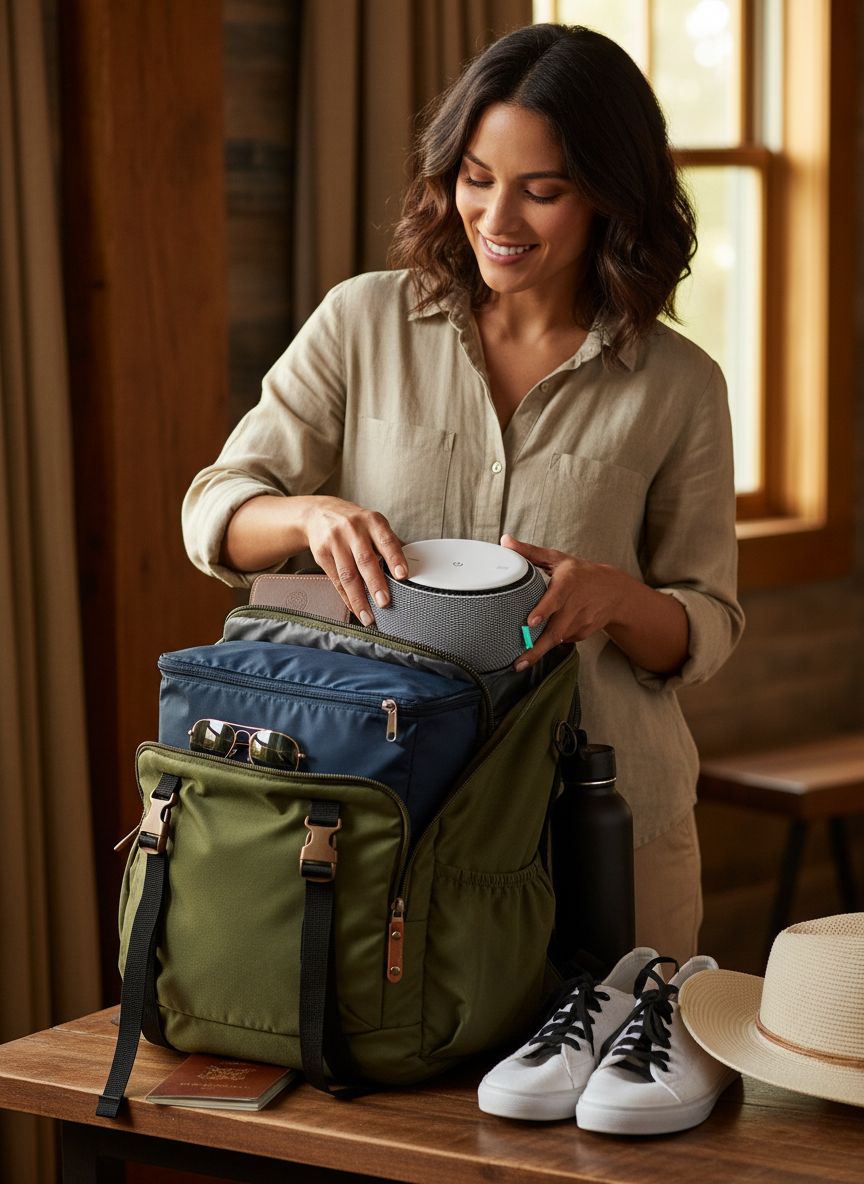
If you travel heavy and check bags anyway, there are larger, more powerful bedside units that will outperform this one on raw volume and tonal range. The SNOOZ is optimized for portability, not maximum output, and if your primary use case is a large bedroom at home with a partner who needs serious sound masking, the compact form factor may leave you wanting more. Similarly, if you’re deeply opposed to managing a companion app and just want to press a button and go, the physical controls are minimal and the best functionality lives in the software. Travelers who tend to pack light and carry a personal item only will find the size ideal, but power users may want to research the full product line first. And if your budget sits at the lower end of the travel accessories market, there are simpler options, though they sacrifice the real-fan technology that makes this one worth the attention.
What It Replaces in My Travel Kit
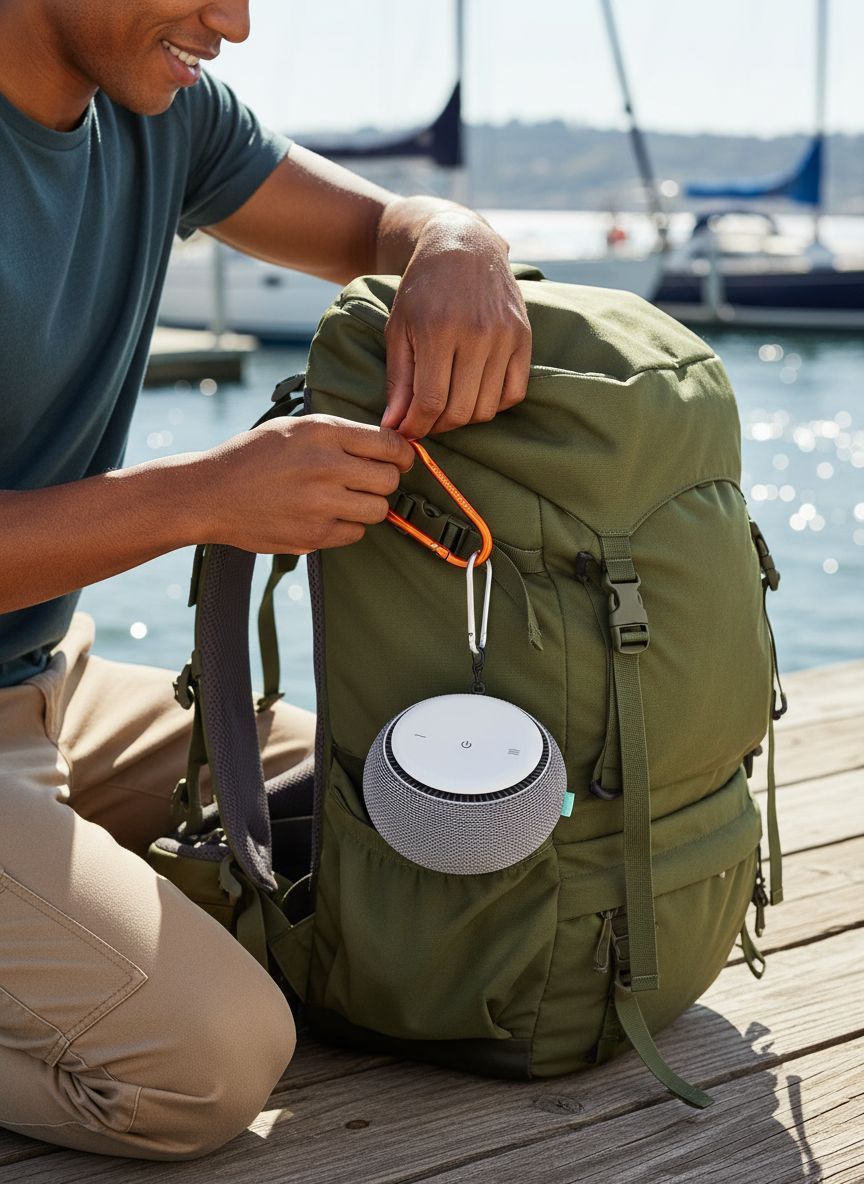
For two years I traveled with a pair of foam earplugs and a free white noise app on my phone, which meant either running down my battery overnight or sleeping with the phone face-down on the nightstand making a tinny approximation of rain. Neither was good. Before that I used a small Bluetooth speaker paired to a looping track, which worked until the loop became audible and I started waking up to the reset. The SNOOZ replaced both of those workarounds with a single object the size of a deck of cards. It also freed my phone from overnight duty, which means I wake up to a charged battery instead of a depleted one. For anyone building out a thoughtful travel sleep kit, this is the anchor piece I’d start with.
FAQ
Is the SNOOZ white noise machine TSA-approved for carry-on bags?
Yes. It’s a compact personal electronic with no liquid components and no unusual materials. It goes through security the same way a phone charger or wireless speaker does, no special handling required.
How loud does the SNOOZ actually get?
The manufacturer rates it up to 83 decibels at maximum, which is roughly equivalent to a strong box fan at close range. In practice, most users, myself included, run it at 30 to 50 percent for sleeping and only push it higher in genuinely loud environments.
Is it good for babies and light sleepers, or is it primarily for adults?
The brand markets it for both, and the adjustable tone control makes it genuinely adaptable. Parents I know who use it for infants tend to run it softer and warmer in tone, while adult travelers dealing with hotel noise tend to push the volume and crispness higher. It handles both use cases well.
Does the build quality match the brand’s reputation?
The plastic shell is smooth and sturdy without feeling precious, and after two years of bag travel mine shows no meaningful wear. The value reads above what you’d expect at this price point, particularly given that the internal fan mechanism, which is the core of the product, has shown no degradation in performance over extended use.
What’s the warranty situation?
SNOOZ offers a one-year limited warranty on the device. Given the build quality and the relatively low mechanical complexity, that coverage feels appropriate, and the brand’s customer support reputation in user feedback skews positive.
The Verdict
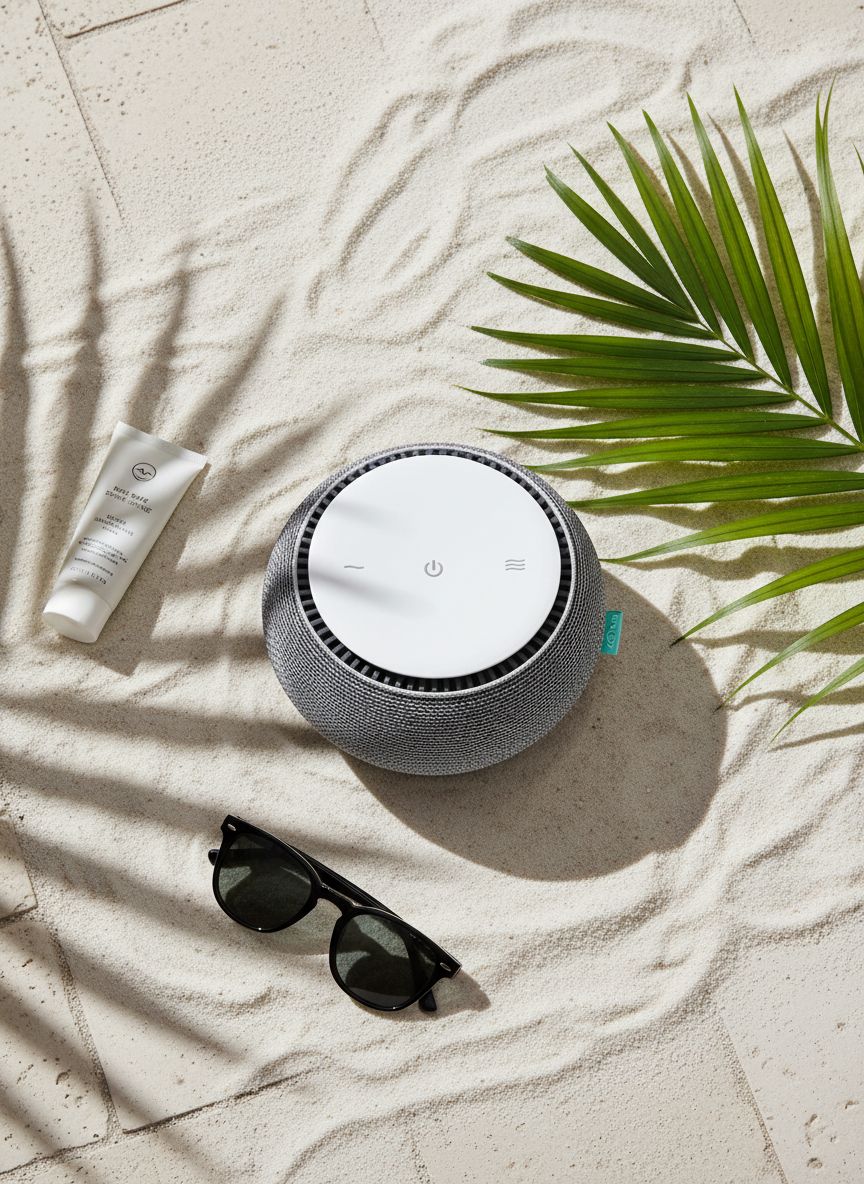
I’m already thinking about the next trip, a week in Tokyo in the spring, and the SNOOZ is already on the packing list. It goes in the same pocket every time, next to the power bank and the flight-day essentials, and I don’t think about it again until I’m standing in a hotel room listening to the building settle around me. Then I plug it in, open the app, and the room gets quieter. That’s the whole pitch. The SNOOZ Smart White Noise Machine review experience is really just a story about sleeping better in places that weren’t designed for your sleep schedule, and it delivers on that in a form factor small enough to forget about until you need it. For what you’re paying, and given how much a single bad night of sleep can cost you in terms of a ruined travel day, the math is easy. This is the best white noise machine for frequent travelers I’ve used, and it’s the one I’d recommend to anyone who takes their rest seriously enough to pack for it. If good sleep is part of how you travel, this belongs in your bag.
Every Angle
The item as photographed for Amazon — front, side, back, detail.
As an Amazon Associate I earn from qualifying purchases.