Folding Steel Transport Wheelchair: Honest Review
From airport terminals to cobblestone side streets, I rolled my father through three countries in a folding wheelchair that weighed less than my camera bag and survived everything I threw at it.
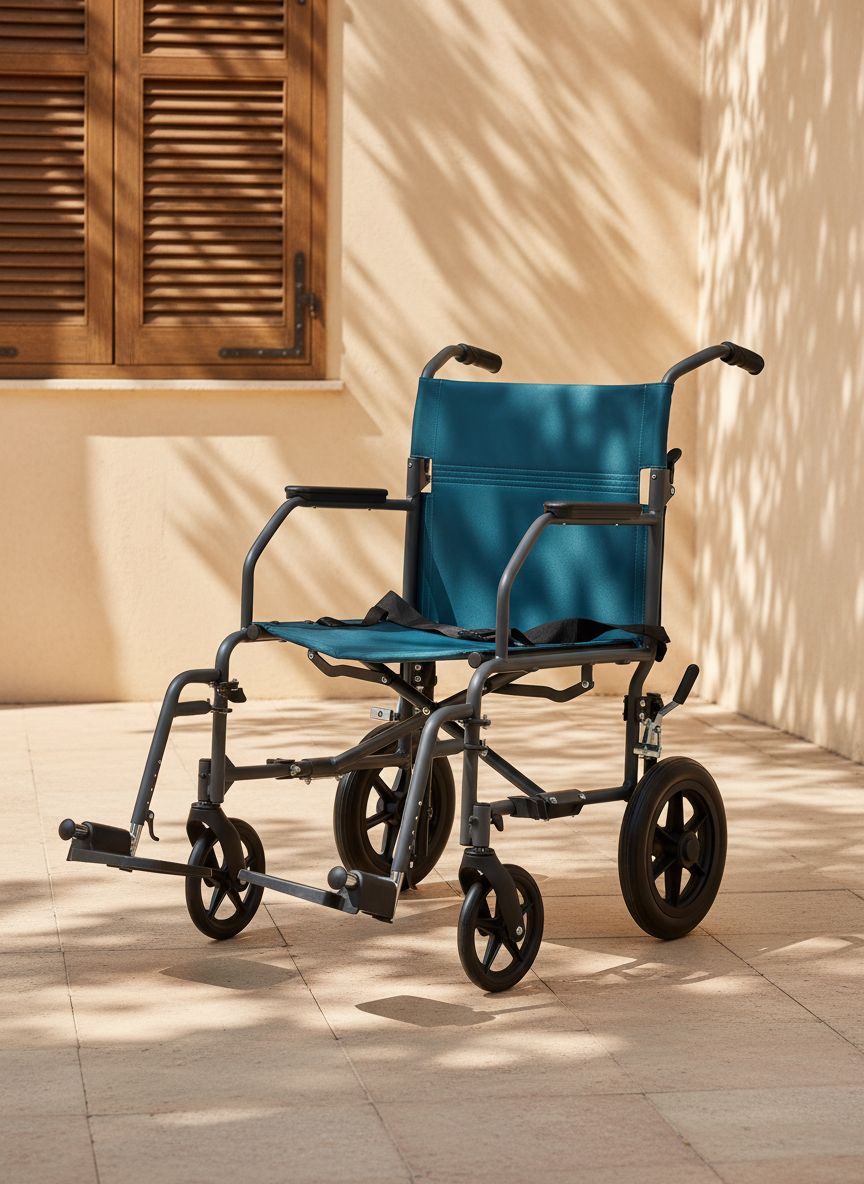
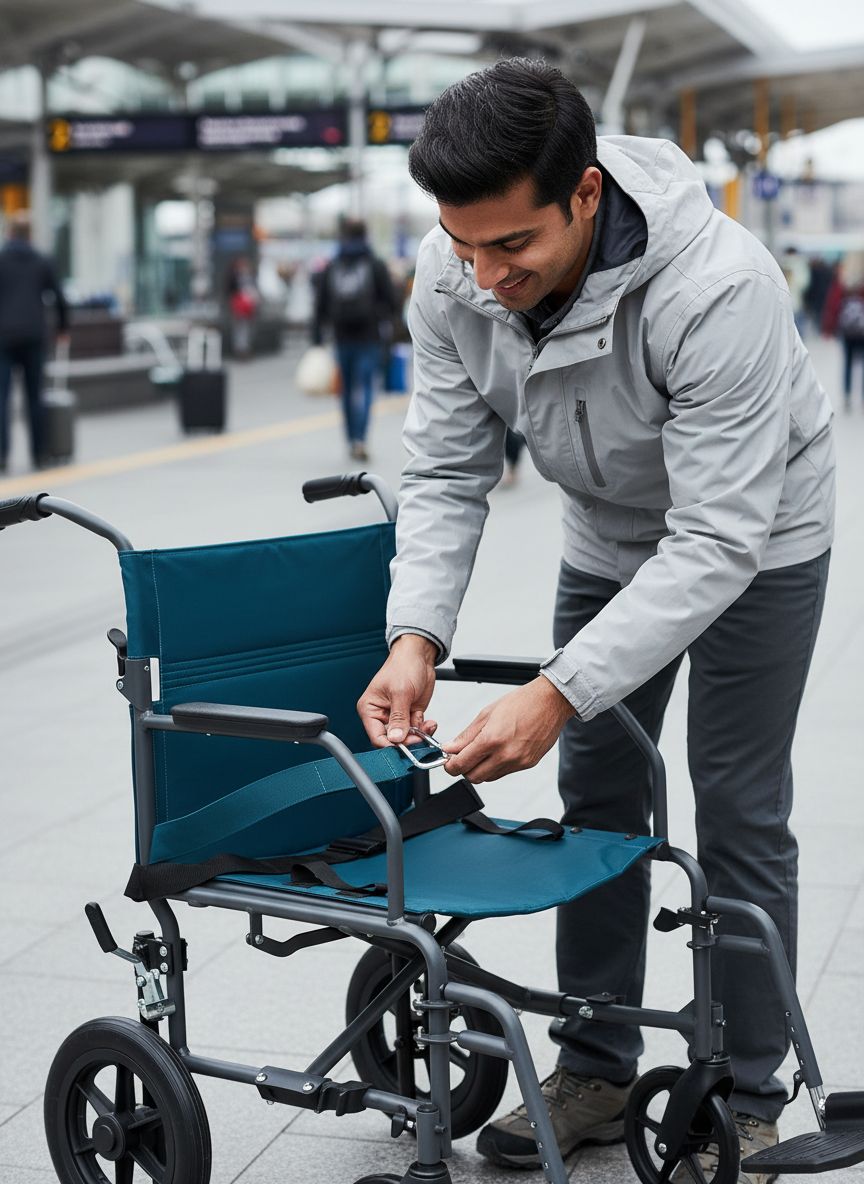
The gate agent at JFK was already giving me the look. You know the one. The “you should have arranged assistance earlier” expression that immediately makes you feel like you’ve failed at logistics and, somehow, at being a decent person. My father stood beside me, 74 years old, post-surgery, visibly exhausted before we’d even reached the jetway. I had the Medline Durable Folding Steel Transport Wheelchair collapsed under one arm, his carry-on in the other, and approximately four minutes before pre-boarding closed. What happened next, surprisingly, was: fine. Better than fine. The chair unfolded in about eight seconds, my father settled into the teal upholstery with a quiet exhale of relief, and we made it down the jetway with two minutes to spare.

The First Time I Used It
I didn’t find this transport wheelchair the way I find most gear, by obsessing over comparison charts at midnight. I found it the way most caregivers find essential equipment: in a mild panic, three days before a flight, after my father’s orthopedic surgeon mentioned almost in passing that he “shouldn’t be walking long distances for a while.” A while turned out to mean six weeks. We had a trip to Portugal already booked. For those of us navigating international mobility and accessibility planning, the window between “we need this” and “we leave” is rarely long enough.
I ordered the Medline primarily because it was available quickly, had an enormous number of verified reviews, and folded down small enough to fit in the overhead bin, or so the dimensions suggested. What I didn’t expect was how much I’d come to rely on it across three separate trips over the following four months.
How It Actually Performs
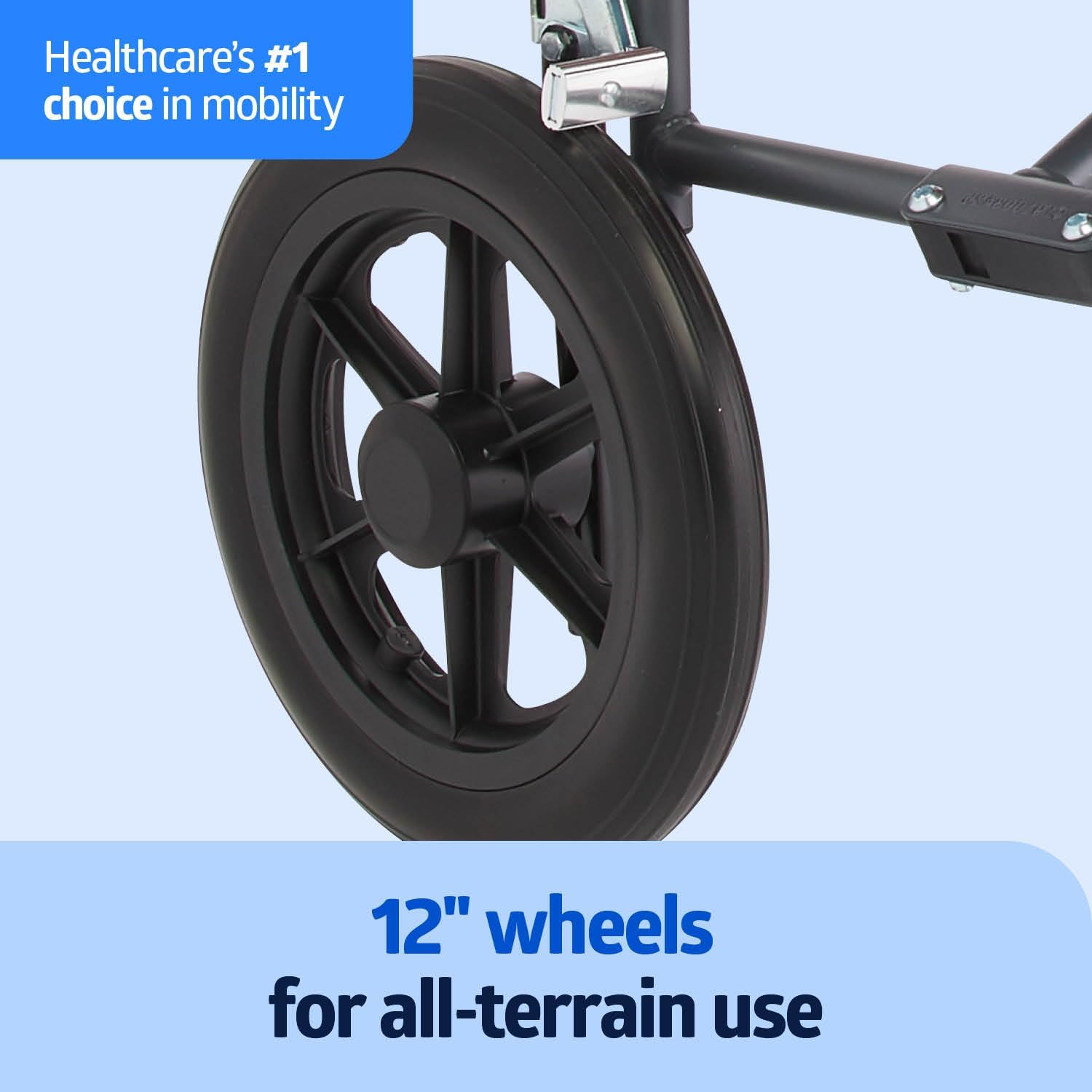
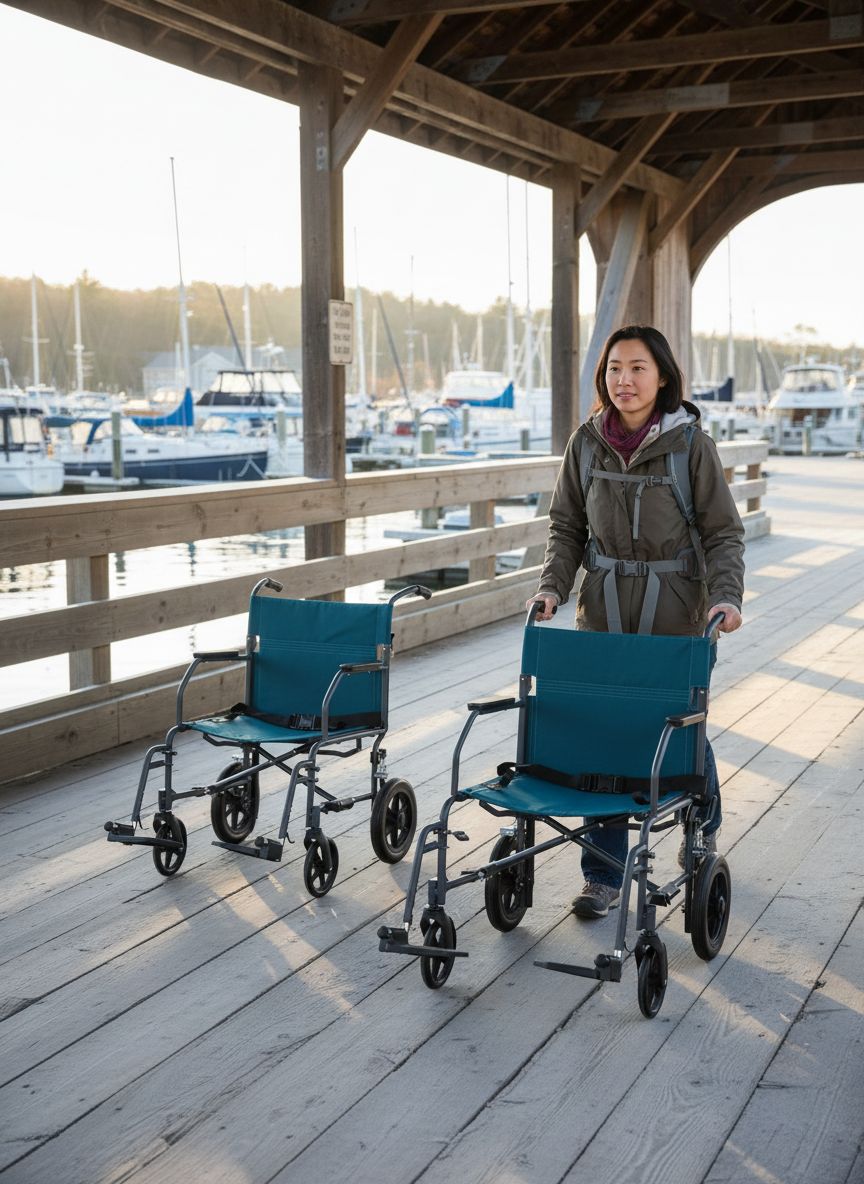
The steel frame is immediately noticeable, and I mean that in both directions. It’s heavier than an aluminum transport chair would be, which matters when you’re lifting it in and out of rental car trunks or negotiating stairs without a ramp. At the same time, that weight translates into a rigidity that cheaper folding chairs simply don’t have. The seat doesn’t flex under a heavier passenger. The frame doesn’t wobble on uneven pavement. The 12-inch rear wheels roll with the kind of resistance that feels controlled rather than sluggish, particularly on smooth airport flooring.
“The teal upholstery is doing a lot of work aesthetically in what is otherwise an uncompromisingly utilitarian category.”
The Microban antimicrobial treatment on the seat and back upholstery is, honestly, the detail I keep mentioning to other caregivers. Hospital waiting rooms, airport restrooms, rental car back seats: a transport wheelchair goes places you’d rather not think about too hard. The antimicrobial fabric treatment doesn’t make the chair sterile, but it does reduce the bacterial load between cleanings, which matters enormously for immunocompromised passengers. For a deeper look at what to consider when flying with mobility equipment, the TSA’s official guide to traveling with wheelchairs and mobility aids is worth bookmarking before your first trip.
The Trips I Actually Took It On
Trip 1: Ten Days in Lisbon and the Algarve
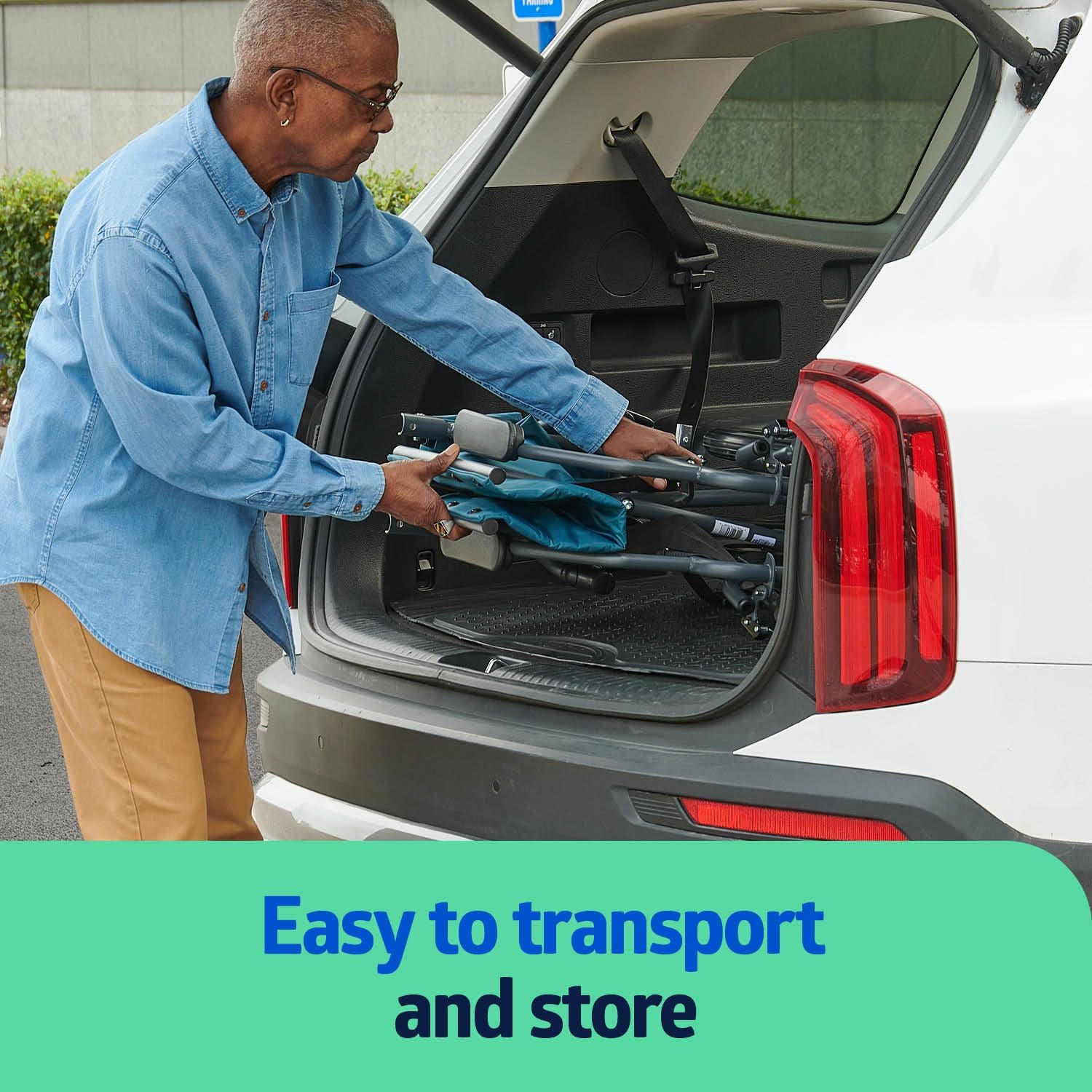
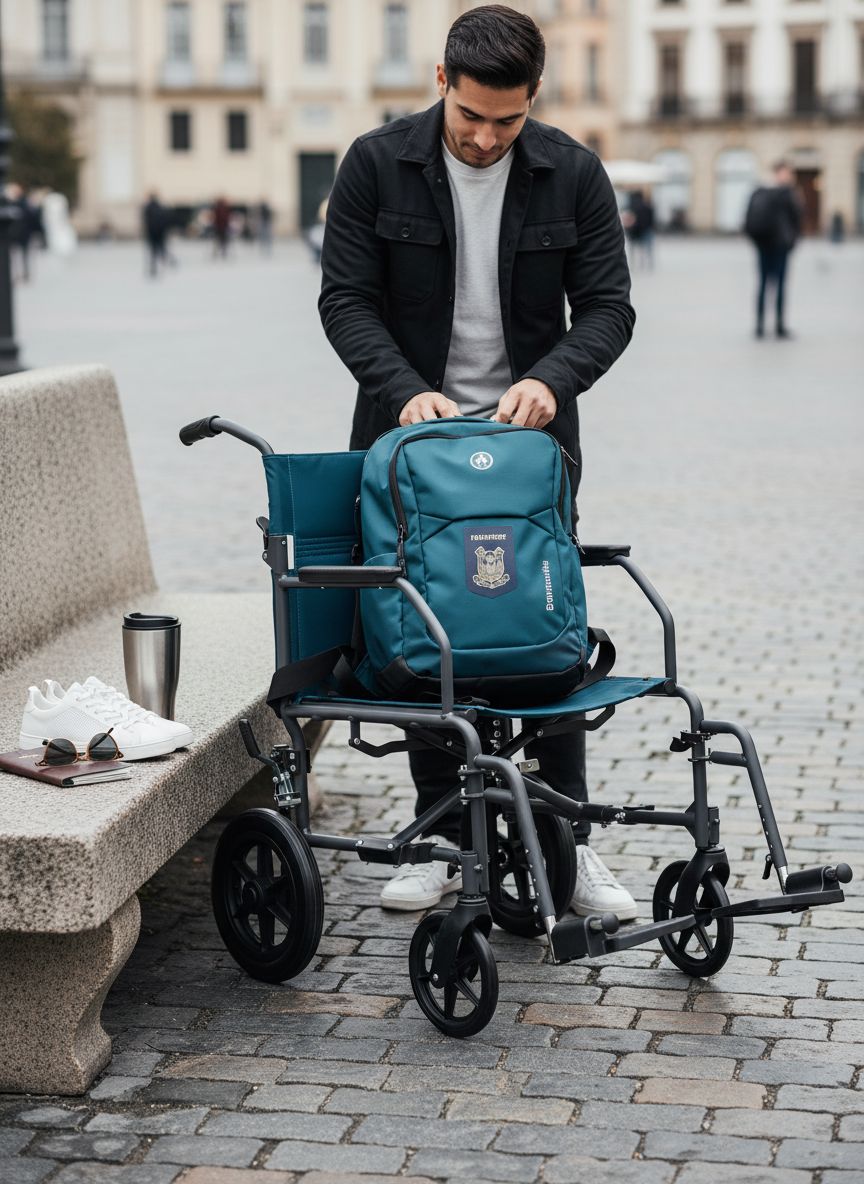
Lisbon is a city that punishes the unprepared. The hills are steep, the cobblestones are ancient and uneven, and the elevators in older buildings are the size of a coat closet. We navigated all of it. The Medline transport wheelchair handled the smoother stretches of the Alfama waterfront without complaint. Where the terrain got genuinely rough, I simply pushed more slowly and my father held on. The frame never buckled, the footrests stayed put, and the entire chair folded flat enough to ride in the back of a small Fiat rental without sacrificing the rear passenger seat. By the end of ten days, I had stopped thinking about the chair at all, which is the highest compliment I can give a piece of gear. For broader trip planning when navigating international travel with mobility considerations, a little pre-research goes a long way.
Trip 2: A Cross-Country Connecting Flight Through O’Hare
O’Hare in February, during a weather delay, is its own specific category of chaos. We had a 55-minute connection that became a 28-minute connection somewhere over Indiana. The Medline folded, went through the X-ray belt, unfolded on the other side, and we moved. What I noticed in that particular sprint was how the push handles feel at a fast walking pace: solid, positioned at a height that didn’t force me to hunch, and grippy enough that my hands didn’t slip when I was maneuvering around a family of six stopped directly in front of a moving walkway. We made the gate. Barely. The chair had nothing to do with why it was close and everything to do with why we got there at all.
Trip 3: A Long Weekend Visit to a Mountain Resort
This was the trip where I pushed the chair the hardest, literally. The resort had paved paths between buildings but gravel between the parking area and the main lodge, and the main lodge had three steps with no ramp at the side entrance. The steel frame absorbed the vibration from the gravel better than I expected. The steps required a tip-and-pull maneuver I’d read about but hadn’t practiced, and the chair cooperated without any sense that something might snap or give. My father said it was, and I’m quoting directly here, “not terrible.” From a 74-year-old Norwegian man, that is a five-star review.
What Other Travelers Are Saying
The Medline transport wheelchair carries a strong rating across more than 2,600 verified reviews, which is a meaningful sample for a product in this category. The patterns that emerge are consistent: caregivers praise the fold mechanism and the stability of the steel frame. Critical notes cluster around the weight relative to aluminum alternatives and, occasionally, the footrest adjustment mechanism, which can be stiff out of the box.
What that consensus tells me is that this chair is being used exactly the way I used it: by people in real caregiving situations, on real trips, who needed something that worked without a learning curve. That’s a different kind of review than gear enthusiasm, and it’s more trustworthy for it.
Who Should Skip It
If you’re looking for the lightest possible transport wheelchair for frequent air travel, the steel construction will frustrate you. There are aluminum-frame options that shave off meaningful weight, and if you’re a solo traveler managing the chair entirely yourself across multiple connections, that difference adds up fast. Travelers who need a self-propelling wheelchair should look elsewhere entirely; the 12-inch rear wheels on this model are not designed for independent use. Families traveling with very young children or managing multiple bags alongside a wheelchair will also find the combined logistics challenging, not because of any flaw in the Medline specifically, but because transport wheelchair travel in general requires a second pair of hands to work smoothly. And if the teal-and-gray colorway isn’t speaking to you, know that the aesthetic is firmly in the medical equipment category, not the lifestyle mobility category. It looks like what it is.
What It Replaces in My Travel Kit
Before this trip series, my father and I had been relying entirely on airport-provided wheelchair assistance, which meant requesting it weeks in advance, waiting at every connection, and ceding all control of timing and routing to whichever attendant was available. The Medline gave us back our autonomy. I could push at the pace we needed. We could stop when he wanted to look at something. We could take the scenic route through a terminal without worrying about inconveniencing an airport employee with a full queue of passengers. For a look at our editor’s top picks for accessible travel gear, this chair sits comfortably in that collection. It replaced a dependency, not just a product, and that’s the kind of swap that actually changes how a trip feels.
I also retired a cheaper folding transport chair I’d borrowed from a neighbor, one that had a tendency to list slightly to the left and whose footrests required a specific prayer to engage properly. The Medline is not that chair.
FAQ
What is the seat width, and will it fit through standard doorways?
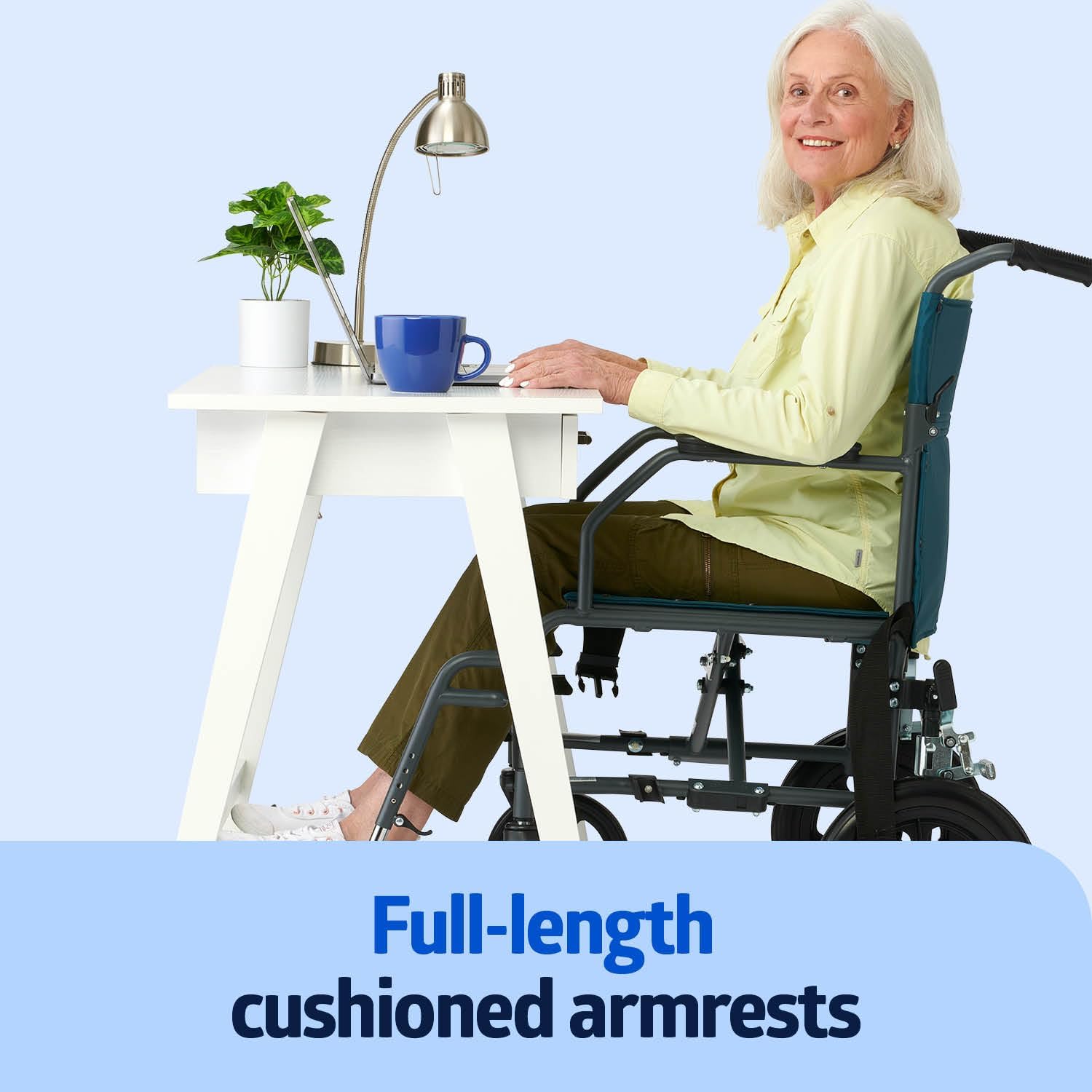
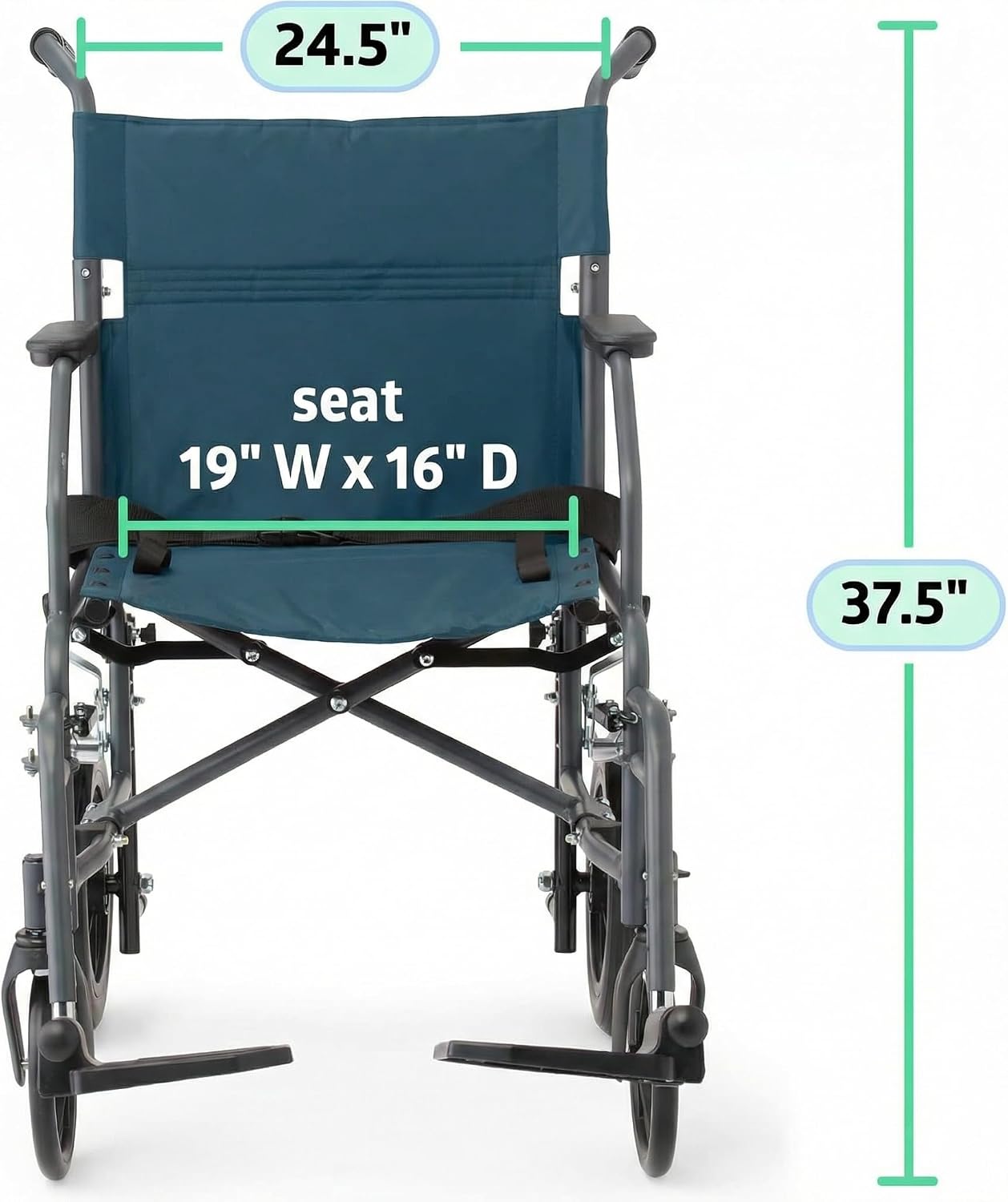
The seat is 19 inches wide. Most standard interior doorways in the United States are 32 to 36 inches wide, so clearance is not typically an issue. Older European buildings and some budget hotel bathrooms can be tighter, and it’s worth checking room accessibility in advance when booking.
How does the Microban treatment work, and does it affect the feel of the upholstery?
Microban is an antimicrobial additive integrated into the fabric during manufacturing, not a surface coating that wears off with washing. It doesn’t change the texture of the upholstery noticeably, and the seat fabric feels like a firm, standard nylon, easy to wipe down after use.
Is this transport wheelchair suitable for international travel and airport use?
Yes, with some planning. The chair folds compactly enough for most vehicle trunks and overhead storage in larger aircraft, though airlines will have specific policies about carry-on mobility devices. For organized guidance on international travel documentation and mobility planning, building a pre-trip checklist is advisable. Always confirm gate-check policies with your carrier before flying.
Does the build quality match the investment for long-term use?
The steel frame and reinforced upholstery perform well above what this tier of transport wheelchair typically delivers. For occasional-to-regular travel use and daily caregiving scenarios, the durability reads as genuinely solid, not provisional. This is a chair you can plan around, not one you hedge against.
Does Medline offer a warranty on this transport wheelchair?
Medline backs this product with a limited manufacturer’s warranty covering frame defects. It’s worth registering the product after purchase and retaining your receipt, particularly if you plan to travel with it frequently and subject it to the wear of airline handling and varied terrain.
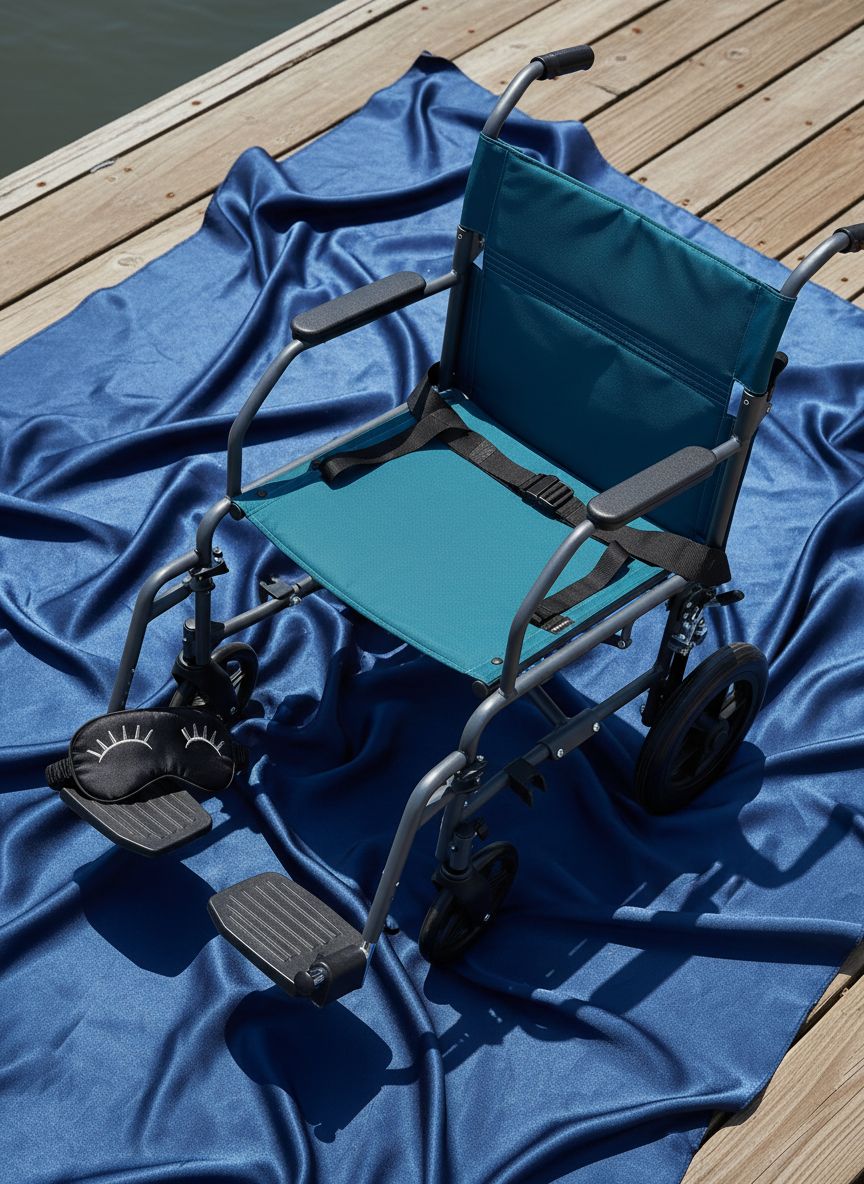
The Verdict
I picture the next trip already. My father, a little stronger than he was six months ago, settled into the teal seat at an international departure terminal, his reading glasses on, entirely unbothered. Me behind him, navigating toward a gate. The Medline folded in the overhead, or checked at the jetway, depending on the aircraft. There’s something I didn’t anticipate when I ordered this chair in a mild panic three days before a flight to Lisbon: it would become the piece of gear I thought about least, because it simply never gave me a reason to think about it. That quiet reliability is rare and worth paying attention to. For other caregivers and accessibility-minded travelers building out their mobility toolkit, this chair is a credible, well-constructed starting point, not a compromise. You can also browse thoughtful travel gear for every kind of traveler if you’re looking to round out a kit. And for context on how accessible travel has evolved as a category, the momentum is real and worth following.
If you’re managing mobility challenges, either your own or a loved one’s, and you need a folding transport wheelchair that earns its place in your travel kit without demanding your constant attention, the Medline Durable Folding Steel Transport Wheelchair is the one I’d hand you. Quietly dependable, and that’s exactly enough. For more picks in this space, explore our full international mobility gear archive or check what’s new in travel accessories for international trips. This is the chair I’d pack again tomorrow.
Every Angle
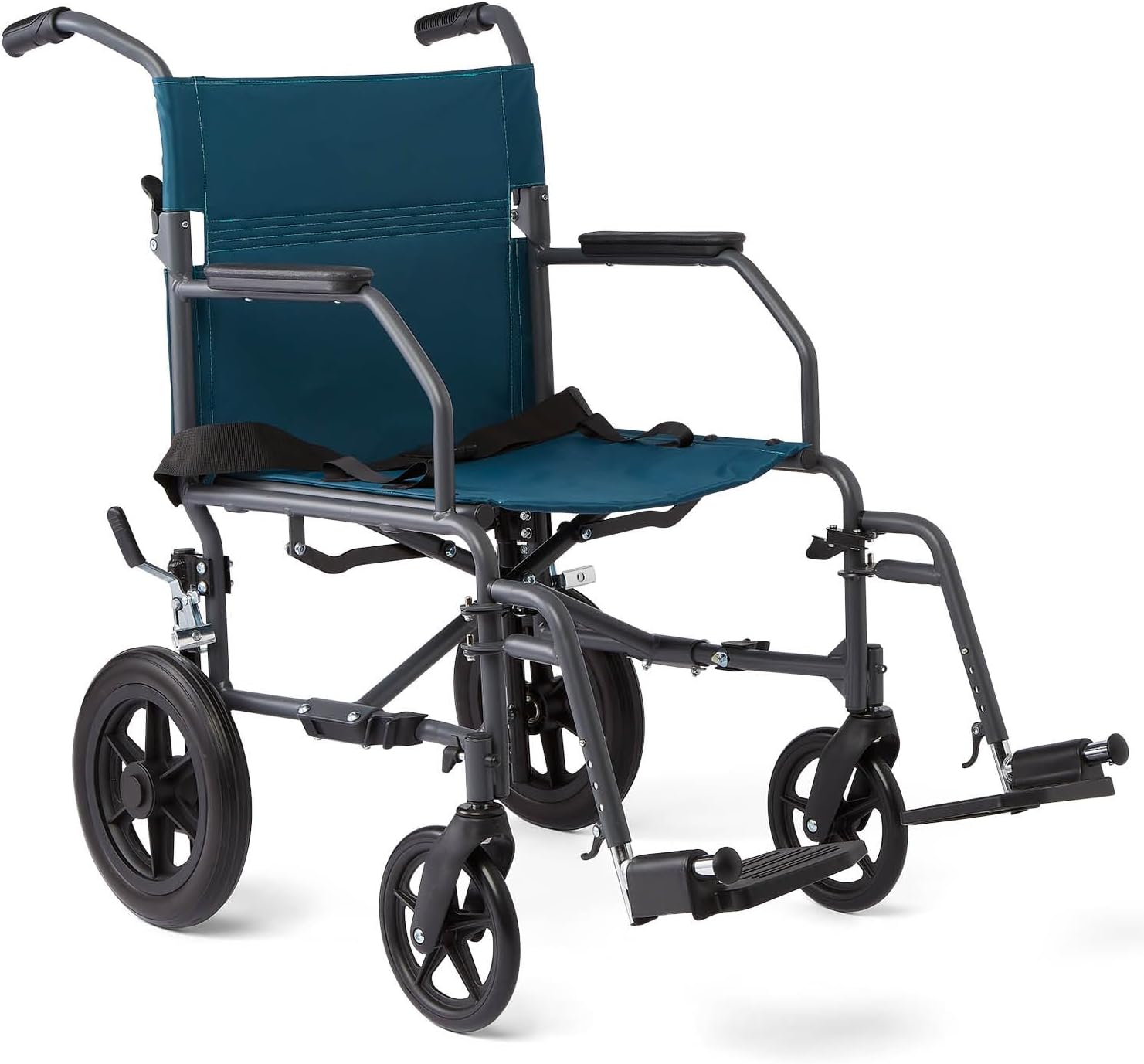
The item as photographed for Amazon — front, side, back, detail.
As an Amazon Associate I earn from qualifying purchases.